
Services
Cavity Detection
We spot cavities early in growing smiles, so treatment stays simple, gentle, and comfortable for your child.

Why choose us
Benefits of Cavity Detection
Catch Cavities Early
We look for decay while it's still small, so treatment stays simple for your child.
Built For Kids
Our team works exclusively with infants, children, adolescents, and teens, so every visit is paced for young patients.
Parents Stay Close
You're welcome in the treatment room with your child throughout the exam.
Comfort Options Available
Nitrous oxide, oral sedation, and local anesthesia are available for children who feel anxious.
Care That Fits Budgets
We accept all major PPO plans, Medicaid, and self-pay, with flexible financing, HSA/FSA, and a $99 new patient special.
Maybe you noticed a dark speck on a molar while brushing your child's teeth. Maybe your child mentioned that cold water "zings" one side of their mouth, or they've started chewing only on the left. Or maybe nothing seems wrong at all — and that's exactly why checkups matter. Tooth decay in children is often silent in its earliest stages, which is when it's easiest to address. Finding it early is one of the most valuable things we do at every visit in our Easley and Greenville offices.
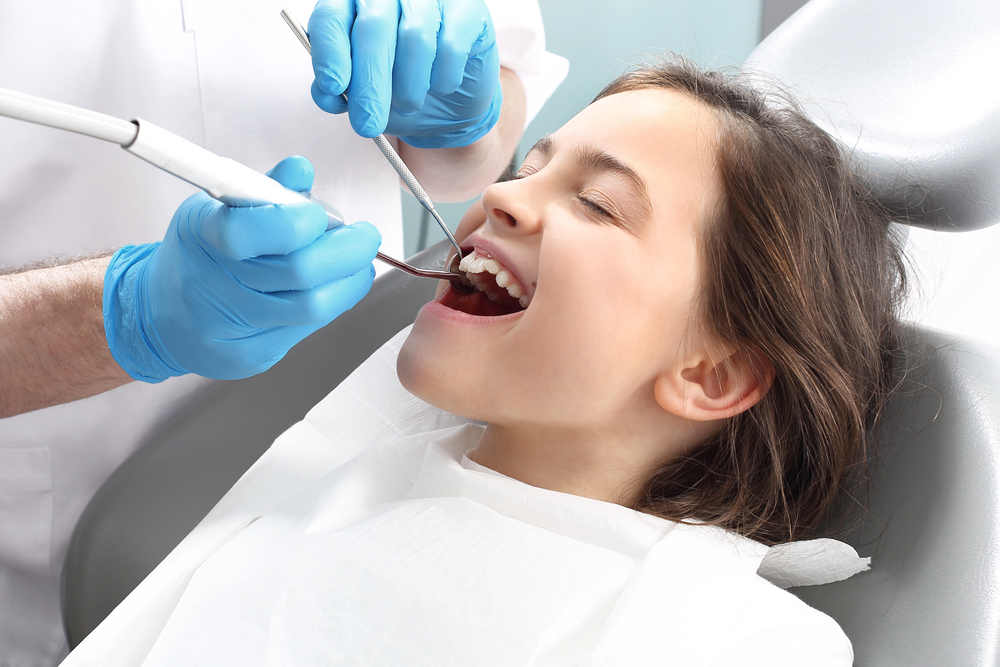
Cavity detection is the process of examining a child's teeth for tooth decay — the soft, demineralized areas that form when bacteria and sugars break down enamel over time. It isn't a single test so much as a careful, layered look at the whole mouth during a dental exam: visual inspection of every tooth surface, checking the deep grooves of back teeth, looking between teeth where a toothbrush can't reach, and paying attention to what your child tells us about sensitivity or discomfort. Our dental hygienist's cleaning appointment also plays a role, since removing plaque makes early changes in the enamel far easier to see.
This applies to just about every child we see, from a toddler at their first-tooth or age-one visit through the teenage years. Babies and toddlers can develop decay on front teeth from frequent bottle or cup use. School-age kids are most likely to get cavities in the pits and grooves of newly erupted permanent molars. Teens with braces, busy sports schedules, and a lot of snacking face their own risks. We're an exclusively pediatric practice, so our whole approach is built around how children's teeth actually develop and where decay tends to show up at each age.
Parents often ask what happens if we find something. The answer depends entirely on what we see. A very early area of weakened enamel may not need drilling at all — it may call for fluoride treatment, a change in snacking or brushing habits, and a closer look at the next visit. Deep grooves that are catching food and plaque may be candidates for dental sealants, a protective coating that helps keep decay from starting. A true cavity usually means a dental filling, and we use tooth-colored composite so the repair blends in. Larger areas of decay on a baby molar may need a crown, and decay that has reached the nerve may require root canal therapy or, in some cases, an extraction.
Here's what we want families to know going in:
- Cavity detection is part of a routine exam — there's no separate preparation your child needs to do.
- Early decay often causes no pain, so waiting for a complaint usually means waiting too long.
- Parents are welcome in the treatment room, so you can see what we see and ask questions in the moment.
- We treat children with special healthcare needs, and we'll adapt the pace and approach to your child.
- If anxiety is a barrier, we offer nitrous oxide, oral sedation, and local and topical anesthesia.
What Comes Next, and How We Keep Cavities From Returning
If no decay is found, that's genuinely good news — and it's also a moment to lock in good habits. We'll talk through brushing and flossing technique, drink and snack choices, and whether sealants or fluoride make sense as extra protection. Prevention and education are the heart of how we practice, and most of that conversation happens right in the chair with you and your child together.
When treatment is needed, we'll explain the plan clearly before anything begins. After a filling, sealant, or crown, most children return to normal activities quickly, though we'll give you specific guidance based on what was done and whether sedation or anesthesia was used. Because decay is driven by ongoing habits, lasting results come from the follow-through: regular cleanings and exams, consistent home care, and catching any new trouble spots while they're still small. If a problem flares up between visits, we offer emergency dental appointments.
Insurance, Financing, and Booking Your Visit
We accept all major PPO insurance plans, Medicaid, and self-pay patients, and we file pediatric claims as a specialist. For families managing costs, we accept HSA and FSA funds, offer flexible financing plans, and have a $99 New Patient Special to make that first visit straightforward.
We'd love to meet your child. Whether you're in Easley, Greenville, or Anderson, give us a call to schedule an exam and cleaning — and let us take a careful look before a small spot becomes a big one.
The process
What to expect
- 1
Exam And Check
We examine your child's teeth and gums to look for signs of decay.
- 2
Review The Findings
We explain what we see in plain language and talk through the treatment options together.
- 3
Treatment And Prevention
We restore any cavities found and follow up with cleanings, sealants, and fluoride to help prevent new ones.