
Fluoride Treatment in Anderson
Cavities are still one of the most common childhood health problems, and they rarely announce themselves early. A small weak spot in enamel can quietly turn into a filling between one checkup and the next. Fluoride treatment is one of the simplest, fastest tools we have to change that math — a few minutes at the end of a cleaning that helps enamel stand up to the sugars, snacks, and busy schedules that are part of real family life in Anderson.
Fluoride is a naturally occurring mineral that strengthens tooth enamel and helps it resist the acids produced by bacteria after eating. In our office, a professional fluoride treatment is a concentrated application placed directly on the teeth — far stronger than what is found in toothpaste or drinking water, and applied where it can do the most good. It works in two directions at once: it makes healthy enamel harder to break down, and it helps remineralize early soft spots before they become full cavities that need drilling and filling.
For Anderson families, this matters most in the years when teeth are newest and most vulnerable. Baby teeth have thinner enamel than adult teeth, and newly erupted permanent molars take time to fully harden after they come in. That window — roughly from the first tooth through the teenage years — is exactly the age range we see. We treat children, adolescents, and teens exclusively, so fluoride is not an afterthought tacked onto an adult appointment. It is part of how we think about every child who sits in our chair.
Nearly every child benefits from fluoride, but some benefit more than others. We look at each child's history and habits rather than applying a single rule, and we talk through the reasoning with parents so the decision makes sense to you.
- Children who have already had cavities or show early white-spot demineralization
- Kids with deep grooves in their molars, where sealants and fluoride work well together
- Children who snack often, drink juice or sports drinks, or carry a water bottle with something sweet in it
- Patients wearing orthodontic appliances, where brushing around brackets is harder
- Children with special healthcare needs, who we regularly treat and who may find thorough daily brushing difficult
- Anyone whose brushing routine is still developing — which describes most young children
If your child is new to us, the exam is where this conversation starts. We use cavity detection alongside a full dental exam to find problems early, and fluoride is often the first, least invasive response to a spot we're watching. When more is needed, we also offer sealants, fillings, crowns, and restorative care in the same office, so nothing has to be handed off elsewhere.
What the Appointment Looks Like
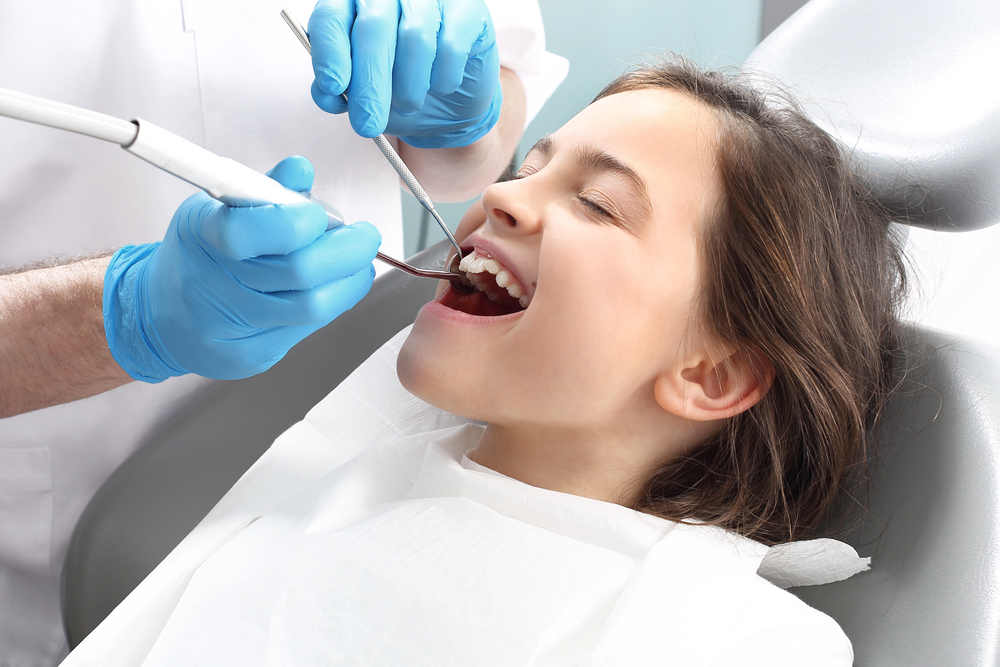
Fluoride comes at the end of a cleaning, once the teeth are free of plaque so the fluoride can contact enamel directly. Our hygienist paints a varnish or gel onto the tooth surfaces with a small brush. It takes a minute or two, there are no needles, and most children barely register it as a procedure at all. Younger kids often sit on a parent's lap — parents are welcome in the treatment room, always, and we'd rather have you there than in a waiting area.
Aftercare is simple. We ask that your child avoid hot foods and drinks and stick to softer foods for the rest of the day, and hold off on brushing until the next morning so the fluoride has time to absorb. The varnish may leave a temporary dull or slightly filmy feel on the teeth; that's expected and brushes away. We'll go over the specifics before you leave, along with home brushing and diet habits, because a fluoride treatment works best as part of a routine rather than as a rescue.
For children who are anxious about dental visits, fluoride is usually the easiest part of the appointment. When anxiety is a bigger obstacle, we have options — nitrous oxide, oral sedation, and local and topical anesthesia — and a board-certified pediatric dentist and dental anesthesiologist on staff to manage them appropriately.
Insurance, Cost, and Getting Scheduled
Preventive care is the least expensive dentistry there is, and we work to keep it accessible. We accept all major PPO insurance plans, accept Medicaid, and welcome self-pay and cash patients. HSA and FSA funds are accepted, and flexible financing plans are available when a broader treatment plan is involved.
New patients from Anderson can start with our $99 New Patient Special. Our offices are in Easley and Greenville, and Anderson families make the drive regularly — often scheduling siblings back to back so one trip covers everyone. We also offer emergency dental appointments when something can't wait.