
Cavity Detection in Anderson
A parent in Anderson notices a small dark spot on a molar while brushing their seven-year-old's teeth. There's no pain, no complaint, no swelling — just a speck that wasn't there before. That's one of the most common reasons families call us, and it's exactly the kind of situation cavity detection is built for. Catching decay early, before it reaches the nerve or causes a toothache at 2 a.m., is one of the simplest ways to keep childhood dentistry easy and inexpensive. Our practice cares for infants through teens from Anderson, Easley, and Greenville, and cavity detection is part of nearly every visit we do.
Cavity detection is the process of finding decay in a child's teeth as early as possible — ideally while it's still small enough to treat with a simple filling, or even reversible with fluoride and better home habits. Children's enamel is thinner than adult enamel, so decay can move quickly, and the deep grooves of newly erupted molars are prime hiding places. Baby teeth matter too: they hold space for permanent teeth and affect chewing, speech, and comfort.
Early detection matters because cavities rarely announce themselves. By the time a child says a tooth hurts, decay has often reached deeper layers, which can mean more involved treatment such as a crown or root canal therapy. When we find a problem in its early stages instead, the fix is usually quick and far less disruptive to your child — and to your schedule. For Anderson families who are already juggling school, sports, and work, that difference is significant.
Every child we see benefits from cavity checks, starting with the first tooth or around age one. Some children need closer attention than others. If your child has deep grooves in their molars, a history of previous fillings, orthodontic appliances that trap food, a diet with frequent snacking or sweet drinks, or a stretch of time since their last dental exam, decay risk goes up.
We also see many children in Anderson whose parents suspect something is wrong — visible pits, staining, sensitivity to cold, chewing on one side only, or food consistently packing between the same two teeth. Those are all worth an appointment. We treat children with special healthcare needs, and parents are welcome in the treatment room, which helps anxious children stay calm while we look. We're an exclusively pediatric practice with a board-certified pediatric dentist on staff, so everything about the visit is scaled to kids.
What Happens During the Visit
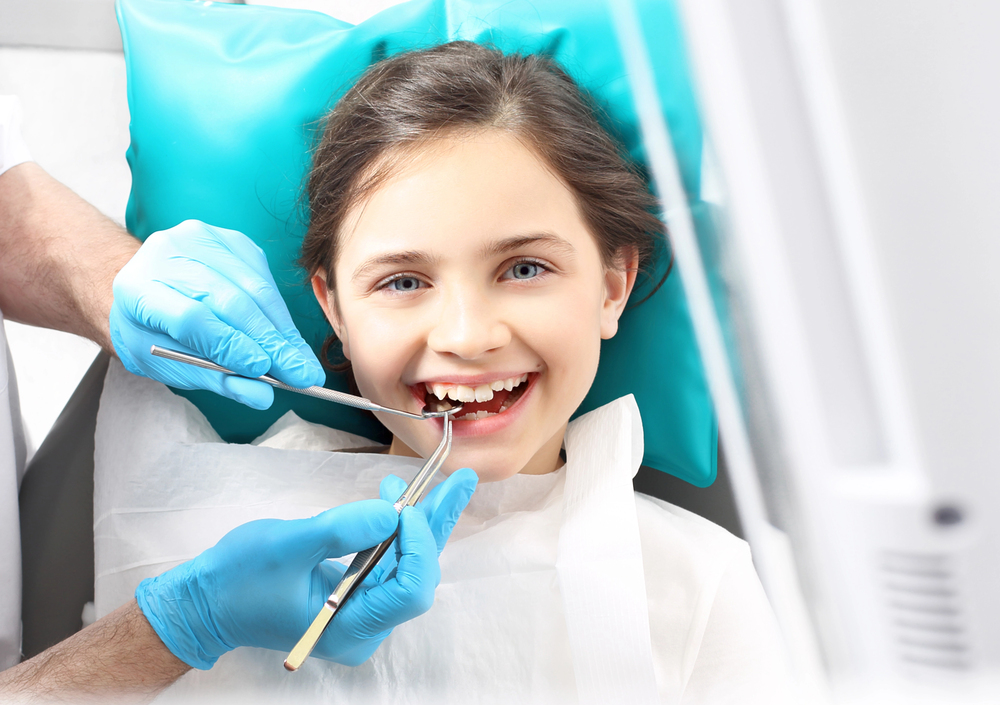
A cavity check is part of a routine dental exam, and it's a straightforward appointment. Here's what Anderson families can generally expect:
- A dental cleaning by our hygienist, since plaque and debris can hide early decay
- A careful visual and tactile exam of every tooth surface, including the grooves and the areas between teeth
- A review of your child's history — diet, brushing habits, any sensitivity or discomfort they've reported
- A clear explanation of what we found, with findings shown to you directly
- A plan: preventive steps, monitoring, or treatment if decay is present
If we find a cavity, we talk through options in plain language. Small areas of decay are typically treated with a dental filling or composite bonding. Larger areas may call for a crown, and if decay has reached the nerve of a molar, root canal therapy may be recommended. For children who are nervous, we offer nitrous oxide (laughing gas), oral sedation, and local and topical anesthesia, and we have anesthesia options specifically for patients with dental anxiety. We also offer emergency dental appointments when pain can't wait.
Prevention and Follow-Up Care
Finding a cavity is only half the job. The other half is keeping the next one from forming. Dental sealants fill in the deep grooves of molars where toothbrush bristles can't reach, and fluoride treatment strengthens enamel that's beginning to weaken. Both are quick, comfortable, and done right in the chair.
After any treatment, we give you specific home instructions — what to eat, how to brush around a new filling, and what to watch for. We put real emphasis on education, because the habits built at home between visits do more than anything we do in the office. Regular checkups keep small problems small.
Insurance, Payment, and Getting Started
We accept all major PPO insurance plans, Medicaid, and self-pay patients. As a pediatric practice, we file insurance claims as a specialist. We also accept HSA and FSA funds and offer flexible financing plans, plus a $99 New Patient Special for families getting started with us.
Our offices are in Easley and Greenville, and we regularly care for children from Anderson. Call us to schedule, and we'll help you sort out coverage before the appointment so there are no surprises.